What gourmet-grade actually means.
Five things decide whether vanilla is worth cooking with. Here is where we stand on each of them.
Tahitensis is not a flavour of vanilla. It is a different vanilla.
Nearly all the world’s vanilla is one species, Vanilla planifolia, picked green and cured fast. Vanilla Tahitensis, sold under the common name Tahitian vanilla, is another species entirely, grown in quantity almost nowhere outside French Polynesia, and it behaves differently at every step.
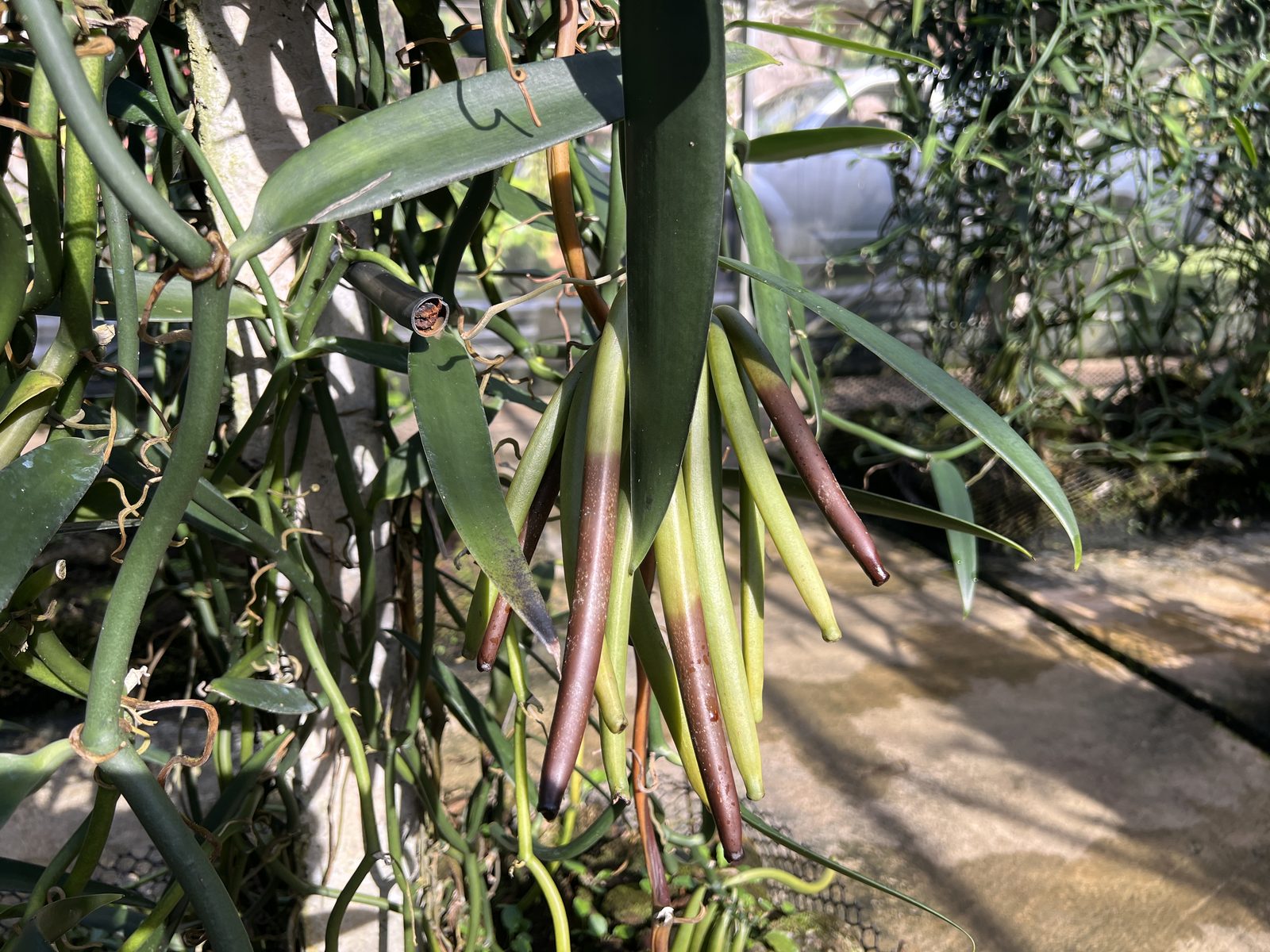
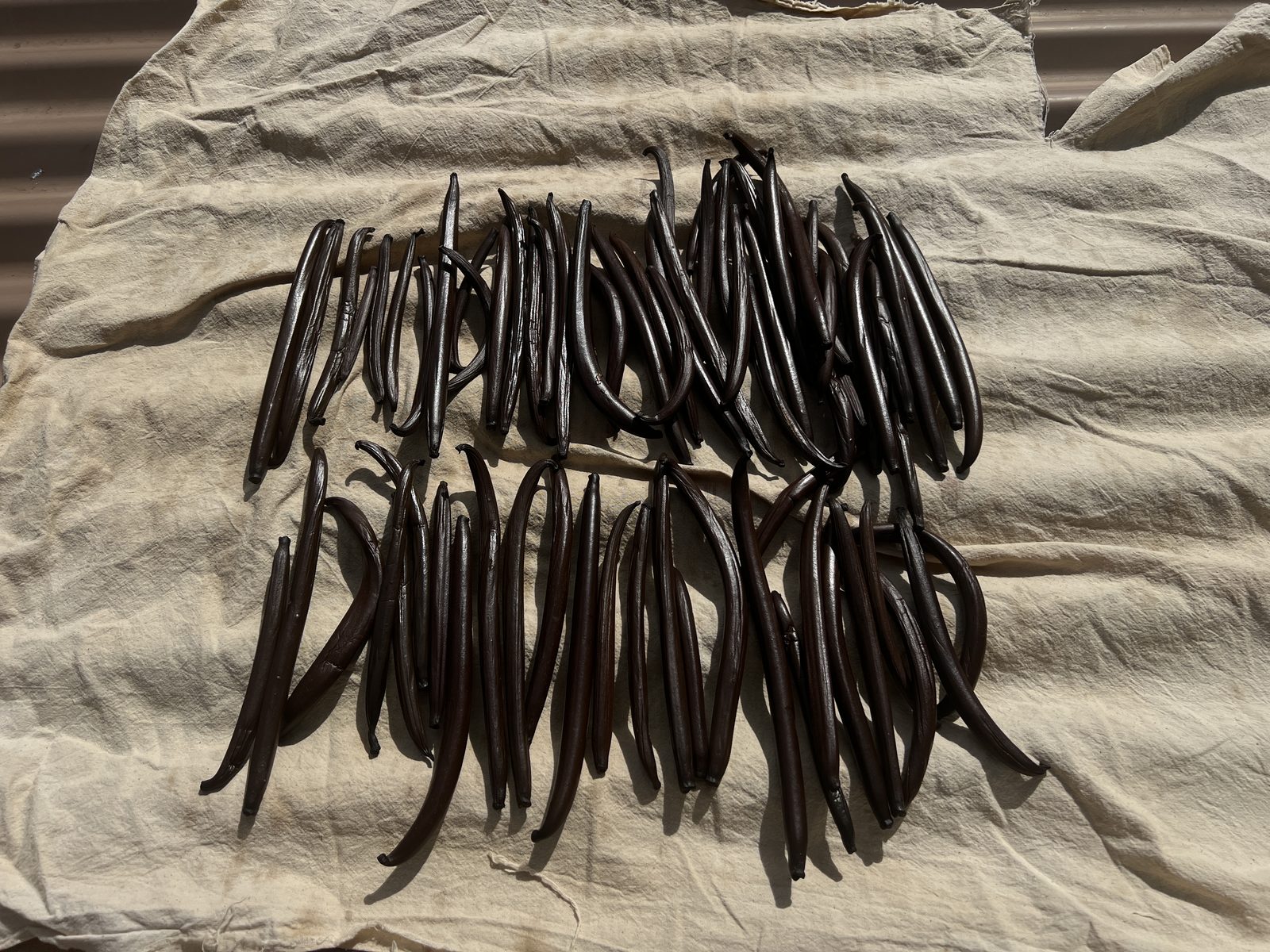
It stays on the vine until it is fully ripe, so the aroma develops in the fruit, not in a warehouse. It cures with more moisture and more natural oil, which is why the pods arrive plump and supple instead of dry and brittle. And the perfume is its own: ripe stone fruit, anise, and something floral that ordinary vanilla never reaches.
Cook with it once and the difference is obvious. This is not a stronger version of the vanilla you know. It is a rarer ingredient altogether.
One estate. Every pod accounted for.
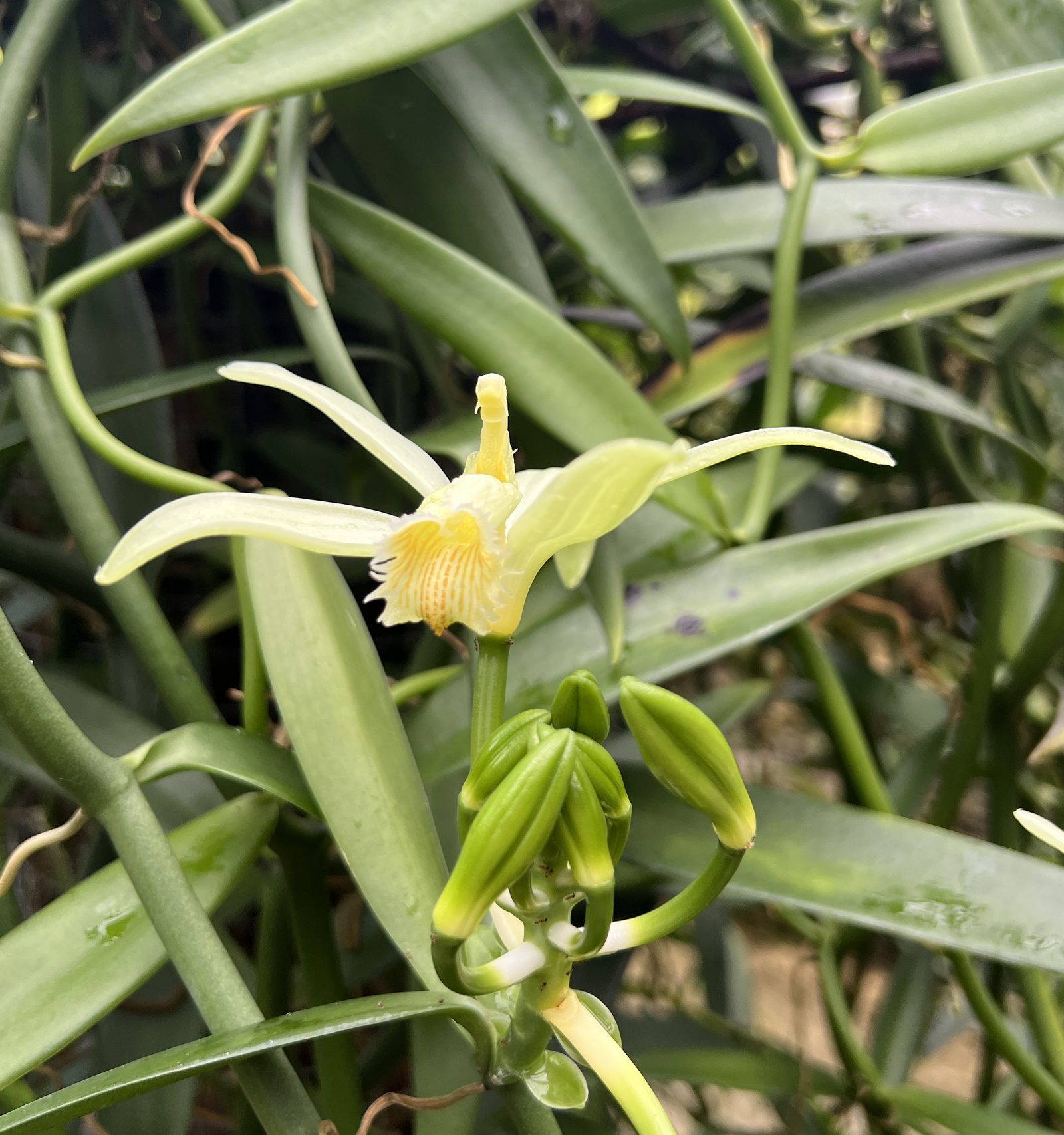
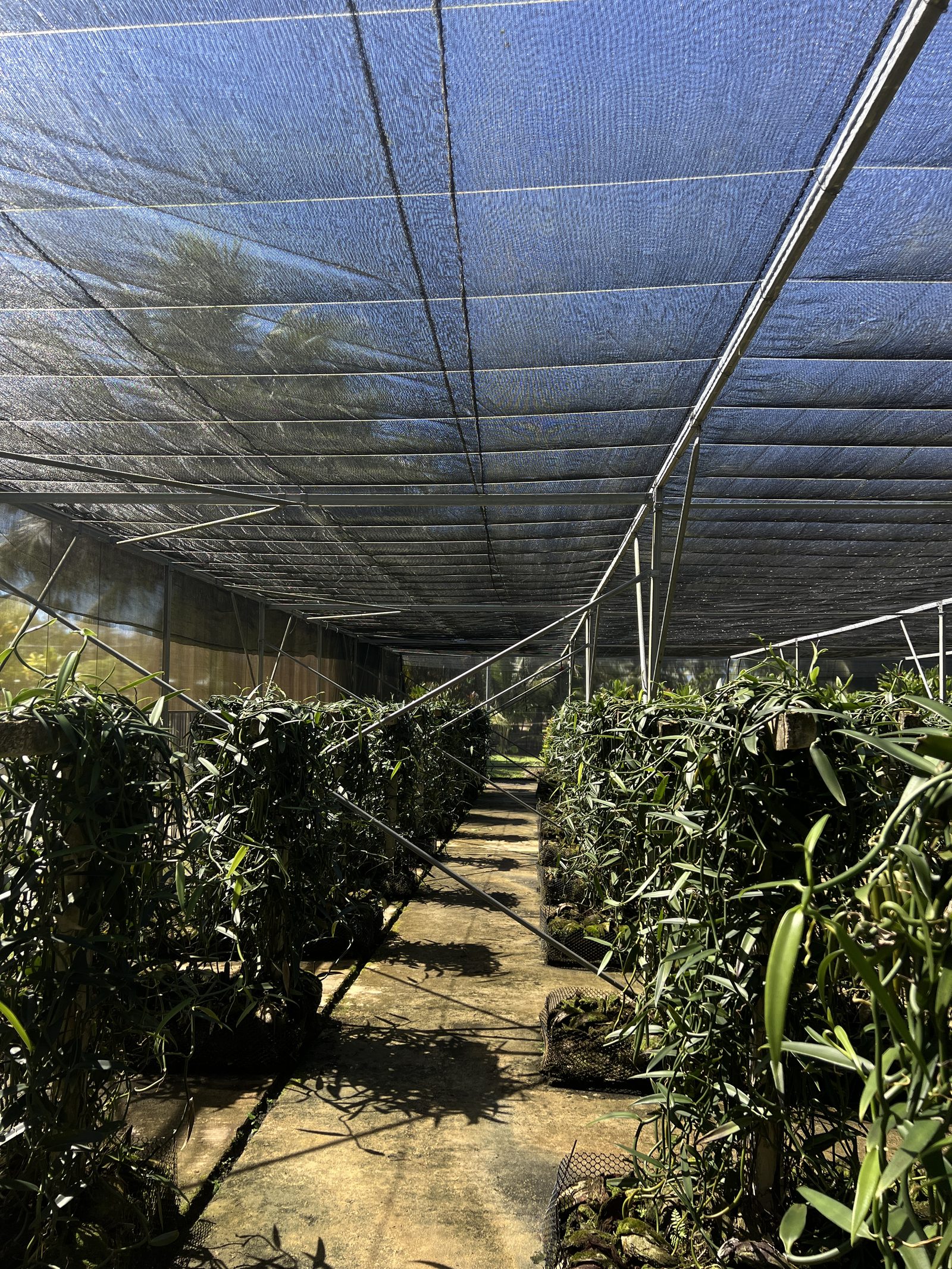
Manea’s Vanilla comes from one family estate on Taha’a. No aggregating from unknown growers, no blending between islands or seasons. Every pack traces back to the same vines, the same soil, and the same hands. No pesticides are used anywhere on the estate.
Cured in the sun, judged by hand.
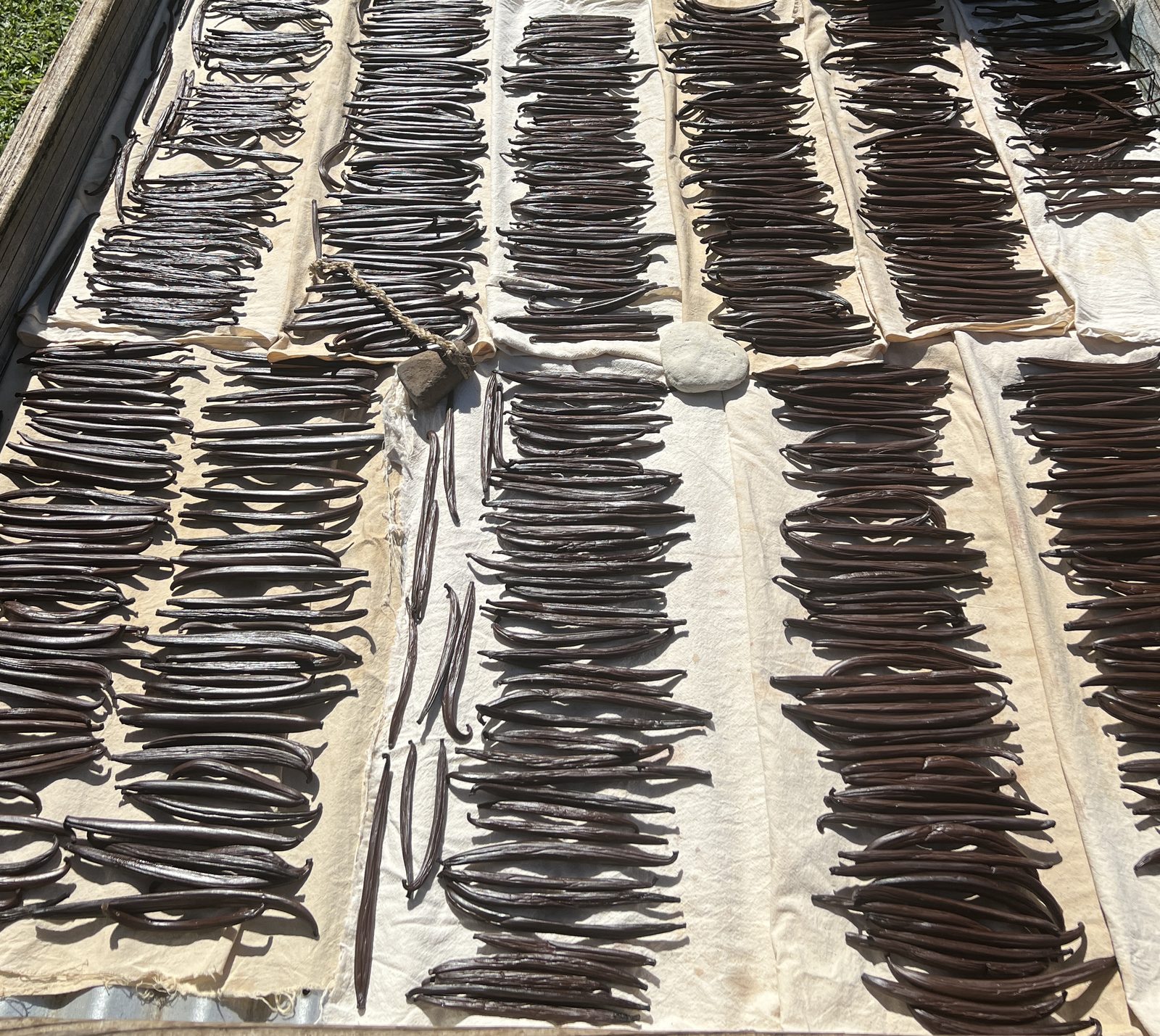
The cure is where aroma is made, and it cannot be rushed. The pods are laid out whenever the sun allows, then wrapped and rested, over and over. Some stretches of weather move it along quickly, others take their time. They are turned, sorted and judged by hand and by nose, and they are finished when they are ready, not when a calendar says so. There is no oven, and no shortcut.
There is no oven, and no shortcut.
From the current harvest. Always.
These pods come from the harvest just finished, along the shortest possible line from the estate to your kitchen. They arrive oily, fragrant and alive, then get vacuum-sealed on packing day so they stay that way. Vanilla that has sat in a warehouse for years cannot do what this does.
Small enough to grade pod by pod.
Small-batch is not a slogan here. It is a limit we keep on purpose, because it is the only way to hold the standard we want. Every batch is small enough to be graded one pod at a time.
Pods that are split, thin, or dull in aroma do not make it into a pack. What is left is weighed by hand, sealed by hand, and labelled with a name we are accountable to. If it would not impress a chef, it does not ship.
Smell it before you even open the pack.
The aroma comes through the seal. That is the whole argument, made in one breath.
Shop the Range